


"Shaping the Sound of the South Asian Culture"
Based in Bangalore, Joel Sakre, is a full-time musician and music producer who works across a range of projects, from producing and arranging music for independent artists to creating soundtracks for ads, documentaries, and films within Karnataka’s regional industry. Alongside this, he has been teaching music production for over fifteen years as well as collaborating with emerging independent artists.
How and when did producing music become a career for you?
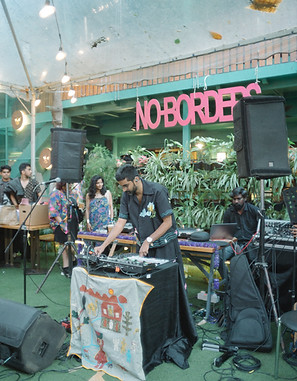
I initially set out to study engineering! During school I was always experimenting with recording music, first on tape and then on my computer, without realizing it could be a career. In college, what began as a hobby turned into something I wanted to pursue seriously. I taught myself production through YouTube and took on small projects, and after finishing my engineering degree, I completed a diploma in Recording Arts and Sound Engineering in Bombay. That’s when I fully transitioned into doing this professionally.
Could you walk us through the creative process?
The creative process really depends on the kind of project I’m working on and what the client needs. When I’m producing for other people, a track can start in many different ways; it might begin with a melody, a set of lyrics that need a tune, or sometimes just a beat that we build everything else around. But when I’m composing my own music as Sakre, I have a distinct workflow that I follow, one that’s more personal and intuitive to my creative process.
Tell us about your previous project - Raja has no friends.

For instance, in my recent project *Raja Has No Friends*, my workflow was centered around sampling. Sampling, to me, is an art form, it’s about taking any piece of sound, sequencing, rearranging, and reinterpreting it to create something entirely new. I work extensively with a sampling device called the SP-404, which allows me to capture sounds, manipulate them, and build complete tracks from those fragments. Lately, I’ve been particularly drawn to samples from South Indian films because I find their sound to be incredibly distinct and rich. I’m exploring ways to incorporate that unique sonic texture into the music I create today.
South Asian culture has been gaining global attention in recent years. How has this rise influenced your work, and what role do you see yourself playing in how the world experiences it?
It’s quite a recent and positive shift that the world, especially the Western music scene, is beginning to look toward South India and recognize the richness of the art forms emerging from here. While that sound is becoming increasingly global, my own music remains deeply rooted in the sounds I grew up with and still hear around Bangalore. That local influence continues to shape my creative identity. At the same time, it’s exciting to see this growing appreciation for diverse cultures from regions like South and Southeast Asia, as it opens up new opportunities for artists like me to collaborate globally, something that might have been much harder to achieve just a few years ago.
Do you ever face moments of self doubt?
Yes, self-doubt is definitely a part and parcel of my life. Even though I’ve been doing this for quite some time, there are always moments when I question whether what I’m creating is truly worth the time and effort. Social media often amplifies that feeling, when you constantly see others putting out so much work, it’s easy to feel like you’re not doing enough or not progressing fast enough. Those comparisons can be hard to avoid, but over time, I’ve learned to recognize them for what they are and find my way past them.
I deal with self-doubt by making music. Once I start creating, those thoughts fade. It’s a recurring cycle, but I’ve learned most artists go through it, making music is my way of grounding myself and moving through it.
What sort of advice would you give to people who would like to pursue the same profession as yours?

The live sessions I released on Instagram were part of an album project called Bangalore Sonic Archives This project began as a week long social media collaboration with a Dubai-based art collective called Alserkal Avenue.They invited five artists from around the Middle East and Asia, including me, to take over their social media feed for a week and create a project. My focus was on sound and music, combined with visuals, capturing the essence of Bangalore’s cult classic spaces.Rather than filming at well-known tourist spots, chose more personal, longstanding places like a 200-year-old fig tree, one of the city’s oldest residents, which has witnessed generations and even changes in kingdoms. I performed a track inspired by that tree, created using samples from films and iconic sounds of Bangalore. Another session was at the Indian Coffee House, a cozy spot dating back to the 1950s or earlier, where I recorded and produced a track reflecting its atmosphere.
I also incorporated sounds from the city’s street musicians, like Nadasuram players, and even sampled shortwave radios from a local radio museum, which preserves and restores radios from the 1910s–1920s. The visuals for the series were conceptualized by my friend Kiran Kalur, with whom I collaborated closely. After the week-long project concluded, I decided to expand it into a proper album. The tracks, along with the videos, will now be released on my own page as part of the full *Bangalore Sonic Archives* album, giving the project a more permanent form beyond the initial week long project.
Do you think Instagram works well for releasing music compared to traditional streaming platforms or physical formats?
I think Instagram being a great platform for music drops is debatable. In my experience, my Instagram grew rapidly last year, but I realized that numbers on social media only take you so far. As an artist, your published work speaks far more than your follower count. Before releasing music as Sakre, I had already been putting out music in different capacities, and later I started making short reels performing with my SP-404 sampler, often shooting in coffee shops because of their aesthetic appeal. Some of these videos picked up traction, even getting more views than usual, and a few people discovered my music through them.
However, it wasn’t until I released the album Raja Has No Friends last September, people started taking me seriously as an artist. Inquiries to perform came in after the album release, and I began playing shows, not because of Instagram, but because of my published work. Even with a growing Instagram following, getting people to buy tickets or attend shows remained just as challenging, and Instagram itself restricts posts with direct calls to action, which further limits reach. That’s when I realized that social media numbers don’t always translate into real-world value.
Consistency in releasing music has mattered far more. My work is currently available on YouTube and SoundCloud, and I also give away music files through merchandise to maintain a sense of ownership, which feels lost in the streaming era where everything exists behind subscriptions and platforms that can remove access at any time. For the upcoming *Bangalore Sonic Archives* I've recreated samples to match the original sounds while avoiding past copyright issues, blending the old aesthetic with fresh performances and processing.

Earlier, you mentioned how AI has made music production much easier than before. What’s your take on the future of AI in the music world?
I’ve been exploring AI music tools out of curiosity, mainly to see how they differ from the software and workflows I usually use. What I’ve realized is that mainstream, commercial music like background tracks for ads or other generic content could very well be replaced by AI because it’s fast and efficient. For example, a simple jingle for a biscuit ad could easily be generated automatically. While this efficiency is impressive, it’s also concerning, because many artists, including myself, make a living from creating commercial music. The widespread use of AI could lower the bar for this type of production, making it harder for real artists to stand out. We might see an influx of AI-generated “noise,” which would make it more challenging for authentic work to gain attention.
At the same time, AI is becoming capable of producing even niche or underground forms of music, which represents a huge shift. But as an artist, I believe authenticity remains crucial. Music tied to personal experiences, storytelling, and genuine expression can’t be replicated by AI. Your life, values, and perspective as an artist create a connection with listeners that goes beyond just a sound. That’s why I focus on using real instruments and synthesizers, even if the result is raw or imperfect, the small errors and quirks make it human. Machines can generate perfection, but imperfection carries authenticity.
Looking ahead, AI could either flood the world with generic music, making it harder for real artists to be noticed, or it could elevate the value of authentic musicianship. People who master instruments and create music from genuine passion may become more treasured, like gold. Art could become more of a niche pursuit again, where those true to their craft stand out. I choose to focus on that brighter perspective, hoping that the value of real, authentic artistry will rise even as AI becomes more capable.
What is one piece of advice you would like to give to somebody who would want to pursue the same career as yours?

Pursuing music full-time today isn’t easy unless you’re juggling multiple streams of work to support it. As Sakre, I make music and perform, but I don’t earn a consistent income solely from being an artist. Most of my earnings come from live performances, but that money often goes back into sustaining my creative practice, producing music videos, creating albums, collaborating with other artists, and making visuals. Relying entirely on art to pay the bills can shift your motivation toward making money rather than making meaningful work, which I try to avoid. I consciously separate the professional and artistic sides of my music, even though both are deeply connected to my practice.
To support myself and maintain a good quality of life, I diversify my income. I produce music for other people, play guitar for various artists, and teach music, which forms a significant part of my earnings. It has taken me more than a decade to reach a sustainable balance.
Today, it’s harder than ever to survive solely as an artist; most people need a stable career to pay their bills while dedicating time and energy to their art. The bar for consistently creating music has become very high, and sustaining both a livelihood and an artistic practice requires immense effort and commitment.
How do you personally define success?
For me, success is simply being able to make music, being able to do what I’m doing now, continually create, grow as an artist, and keep doing it for years to come. That, in itself, is success.