


"For the Love of Records and Everything Around Them"
On The Jungle Floor is a vinyl store, but in spirit, it is much more than that. A space where music leads, but conversations, art, and culture naturally follow.
What begins with a record often expands into shared stories, memories, and moments of discovery.
Tell us what exactly On The Jungle Floor is and how did it begin?

The idea grew from deep personal passion. The founder was a collector long before the store existed, shaped by years of growing up around records built through travel and curiosity. Everyone involved in OTJF shares that connection.
With roots in the music industry, the intent was to widen access to global and Indian music on physical formats while also creating a space for shared discovery.
‘Beyond commerce, we are invested in storytelling. Unlike playlists, physical music stays. It lives on shelves, invites exploration, and sparks conversations long after the needle lifts. That sense of permanence and connection is what the brand was built on. The selection is intentionally wide, guided by the belief that there is something here for everyone and if not, someone will help you find it. From bhajans and ghazals to classic rock and contemporary pop, the collection reflects both depth and openness.
Indian and independent artists are also very central to what we do.
Through sessions like Liner Notes, we work directly with musicians and artists. The larger goal is to keep the ecosystem open and inclusive, creating room for artists, listeners, conversations, and the continued life of physical music.
How do you approach curation?
Curation at OTJF is collective. We’re a seven-member team, with three of us primarily shaping what we stock. It reflects shared taste, music we’ve lived with, returned to, and connected with over time. We’re not chasing “discovery” in a hype sense. It’s more about long-term relationships with sound.
Our selectors and DJs dig constantly, from Thai shadow music and Italian funk to hip hop, ambient, shoegaze, folk rock, and jazz in many forms. Jazz keeps reappearing in unexpected ways as well, whether traditional, spiritual, or ambient-leaning with jazz influences.
Reissued and archival records also play a major role in our curation. Labels like Habibi Funk, Soundway, and Numero Group frequently show up on our shelves. Re-released records are not nostalgia to us, they are recovered histories.
While we’re aware of what people are looking for, curation for us is never driven by trends or
sales alone. Everyone’s taste matters. Our job is to hold space for that.


Is there a sound or genre that keeps showing up in your curation?
Archival and reissued music deserves far more global attention. Labels like Habibi Funk are not just releasing records; they are also helping in restoring histories. With extensive liner notes, fair revenue splits with artists or estates, and deep research, they bring musical ecosystems back into circulation.
Beyond that, we believe cross-genre jazz, ambient-jazz hybrids, global funk movements, and regional archival scenes (from India to Italy to Southeast Asia) deserve deeper listening. There’s a richness in music history that algorithms often flatten. The global listener has access to everything, but not always context. And context is everything
Describe a typical listening session at On The Jungle Floor.
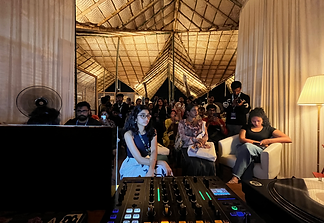
At its heart, a listening session at OTJF is about shared attention. When we host album-centric sessions, participants listen from Side A to Side B, with pauses in between to unpack lyrics, production, context, time period, and the artist’s journey. Each session is led by someone deeply familiar with the body of work, backed by research.
We encourage conversation. Questions are welcomed. Disagreement is welcomed. We also host selector sessions that are intimate vinyl-only sets where DJs play from their personal collections and Liner Notes, where artists guide audiences through works and creative processes.
The idea is simple: not passive listening, but active engagement.
What’s one common misconception people have about vinyl culture, sound curation, or the communities around it?
One of the biggest misconceptions is that vinyl is too expensive. While it can feel costly upfront, records are long-term investments. They often outlast us.
Another misconception, especially around sound curation, is that curators function like streaming services. They don’t.
People sometimes assume a curator has “everything in the bag” and can instantly respond
to requests the way an algorithm does. But thoughtful curation takes time. When we build a
set or curate sound for a space, we spend hours selecting records that match a brief, a
mood, and an environment.Curators are not streaming platforms. They are editors of experience. That distinction matters.
What responsibility do you think curators and listeners have towards protecting music history and the people behind it
In the age of algorithmic playlists, music often becomes background. Streaming allows endless consumption, but it rarely reflects everything that went into making a track or album, the studio, the label, the musicians, the producers, the artwork, the cultural context.
That’s where attentive listening and physical media become important.’
‘When someone engages with analog formats from vinyl to liner notes and album art, they
are subconsciously engaging with the ecosystem behind the music.’
Curation carries responsibility in that sense. It’s not just about playing the track. It’s about giving due credit to the people and processes behind it. Archivists, diggers, and reissue labels actively preserve musical history. Whether it’s Habibi Funk, Digging in India, or other independent archival efforts they restore stories, compensate artists or estates fairly, and bring forgotten sounds back into circulation. Listeners also have responsibility. To ask questions. To read liner notes. To engage beyond passive consumption. Preservation is collective.

What has been the hardest part of building something slow and archival in such a fast trend driven Internet culture?
The hardest part is resisting urgency. We’re building slowly, intentionally. We were around before vinyl became a “moment” and we’ll likely be here after it fades.
But vinyl has always had a loyal community of collectors, archivists, and listeners who care
deeply. Culture is cyclical. Tangibility returns. There’s something about holding a record, the artwork, the texture, the history all of that creates a different relationship with music. It feels personal, inherited, preserved. Building something slow makes sense because connection to the past still matters.

What does success look like for On The Jungle Floor?
Success for OTJF is continuing to bring music to people in meaningful ways.
It’s about sparking curiosity. Creating space for learning, listening, and conversation. If that
growth eventually takes us to other cities, success would mean carrying that same ethos
with us, community-first, culture-driven, thoughtful. Staying rooted while growing, that’s success.
