


Good Design Influences You Without You Realising It.
A visual designer and illustrator from Delhi with a love for maximalism, storytelling, typography and internet culture. In this conversation, she talks about growing up as an artistic child, finding her way into design through Instagram, her process, creative burnout, AI tools and why every font has a personality.
What do you do and why do you do it?
‘I design things because that’s the thing I know how to do. I have always been artsy. I used to go to fine art classes, and for most of my childhood, drawing was the one thing that genuinely excited me. I’ve always had a knack for it. When I was in school, I honestly had no guidance about design or the kind of fields that existed. I just knew I didn’t want to go into fashion design. I was exploring different options when I came across footwear design. It felt new and interesting at the time. But eventually I realised it wasn’t something I truly wanted to do.
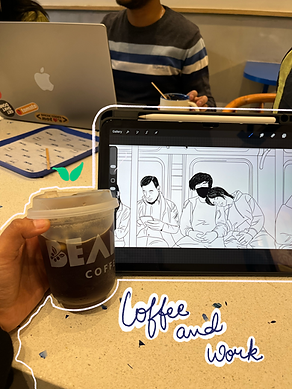
Footwear design was very practical and everything completely stopped during the COVID lockdown. That was the time I started spending a lot of time on Instagram and discovering illustration online. I saw these really cool illustrations, and something just clicked for me. I remember thinking, okay, I want to do this. That’s when I got an iPad and started illustrating constantly. I was making work and posting it online. Through that process, I realised visual communication was something I genuinely wanted to pursue seriously.
So I went online, researched courses in the field and eventually pursued my Masters in Visual Experiential Design.’
Tell us about your experience working at Zomato.
‘Zomato has been such a wonderful experience. I joined as an intern, and I was super scared because it was my first corporate job straight out of college. But things felt so smooth there. Everyone in the design team was fresh out of college, too, so the vibe was very casual and collaborative. Whenever a new project came in, before even opening our laptops, we would pull out sketchpads and start brainstorming ideas. There were days when we would just sit in meeting rooms watching ads, discussing design trends and talking about campaigns for hours. I’ll tell you about one campaign. We were working on the Durga Puja campaign, where we spent almost 15-20 days just brainstorming ideas and figuring out what story we wanted to tell that year. We would come to the office, sit in meeting rooms, throw around ideas, make fun of bad ones, watch ads and look at what other brands were doing. Usually, we’d narrow it down to 4-5 ideas and present them to our creative head. It was a balancing game between ambitious ideas and practical realities. Everyone around you is thinking big all the time. But there were definitely a lot of chaotic moments.
It honestly felt like the perfect first job because there wasn’t this constant pressure around you. Of course, there were deadlines, but you still had the space to experiment freely and try new ideas. And I think that’s what Zomato really gives designers. Space to grow.’

According to you, what role does storytelling play in design?
‘Honestly, I don’t think design can exist without storytelling. Whatever you make, whether it’s an illustration, an icon or even something very small, there’s always a story behind it. You can’t really separate storytelling from design.’
Do you think brands care about storytelling?
‘I do think brands care about storytelling. A lot of strong brands are built entirely around it. Though sometimes brands focus too much on aesthetics and forget why storytelling actually matters. For me, storytelling is what makes people feel connected to a brand. Like Nike, their entire identity is built around speed, hustle and ambition. The way they tell stories around a person’s journey and struggle is so powerful. That’s what stays with people.’

Do you think audiences today consume design consciously, or just aesthetically?
‘I think it’s a very subjective thing. People do consume design consciously, but also very subconsciously at the same time. Nobody is actively looking at something and thinking, Oh, this is such a nice design. But subconsciously, they start liking a product because of its branding, colours, typography or the feeling it creates. Good design influences people without them even realising it.’
Have there been any low moments? How do you cope with them?
‘Creative burnout definitely happens. There are phases where you just stop getting ideas, but still have to present work somehow. Usually, I deal with it by talking to people more and taking their input. Sometimes just discussing an idea out loud helps unblock something creatively. Writing also helps a lot. I think you move through burnout by staying around ideas instead of isolating yourself.’
How do you think you have grown as a designer in the past year?
‘I’ve started seeing things very differently now compared to even a year ago. Earlier, I would just look at things casually. An ad was just an ad. A colour was just a colour. Now everything feels like it has character to it. Every font has a personality. There’s a reason why certain fonts are used for certain products. Sometimes I look at a font and immediately think okay, this one feels playful, this one feels serious, this one feels like an auntie who would judge you.’
What’s something audiences misunderstand about visual designers?
‘I think people really misunderstand what visual designers actually do. Most people think we just make posts, flyers or templates. But there’s so much thought behind every small thing. Why is a logo placed somewhere? Why is something balanced visually? Why a colour feels a certain way. There’s an entire process and story behind it. And as an illustrator, the biggest misconception is that people assume you just make cartoons.’
What are your thoughts on AI as a designer?
‘I use AI all the time now. Initially, there was definitely paranoia around it replacing designers. Suddenly, ChatGPT could write, AI could generate images, and everything felt very overwhelming. But after using these tools properly, I really don’t think they replace creativity. They just make certain things easier and faster. Earlier, we had to wait for shoots and limited image outputs. Now you can generate so much more and experiment freely. You can literally sit at home and create a full film using AI tools. Personally, I’m excited to see how these tools evolve further.’
As somebody who has just started out, would you like to share some advice with the audience?
‘My advice would honestly just be to keep creating. A lot of younger people text me asking how to start designing or how to get better. And I always say the same thing. Don’t run behind perfection. Just make things. Keep posting. Keep experimenting. Whether it’s on Behance, Instagram or even privately for yourself, just keep creating.’
What’s your idea of success?
‘Right now, my idea of success is honestly just growth. If I learn something new every day, even something very small, I feel fulfilled. That’s enough for me currently.’
